Marble Texture Paint: Types, Price, Colours and How to Apply It (2026 Guide)
Marble texture paint is a decorative wall finish that gives plaster the look of marble. In India the name covers two very different products. One is a granular finish made from real marble chips held in a binder, sold as Madrasi Dana, marble dana or marble chips paint. The other is a smooth marble effect, made with paints or polished plasters that copy marble’s veins and shine. They differ in look, material, tools and price, so the first step is knowing which one you want.
This guide covers both, with the main focus on the granular Madrasi Dana finish that is common on Indian homes, elevations and boundary walls. It explains what the material is made of, how the rate is worked out, how to choose grain size and colours, which walls suit it, and how the wall is prepared and the texture applied. हिंदी में पढ़ना हो तो देखें: मार्बल टेक्सचर पेंट क्या है.
In this guide (15 sections)
- Quick answers
- What is marble texture paint?
- Madrasi Dana, marble dana and marble chips paint: what the names mean
- Marble texture paint material: granules, binder and grain size
- How to choose marble texture paint: shade card, catalogue, samples and reviews
- Marble texture paint benefits and disadvantages
- Marble texture paint price and rate (2026)
- Marble texture paint colours and colour combinations
- Where to use marble texture paint indoors
- Marble texture paint for exterior walls, front elevation and boundary walls
- Wall preparation before marble texture paint
- How to apply marble texture paint: step by step
- Marble effect painting technique: how a smooth finish is made
- Marble texture paint: frequently asked questions
- Next step: see samples and get a quote
Quick answers
- What is it? Either a textured coating of marble granules in a binder (Madrasi Dana), or a smooth painted or plastered marble effect.
- What is the rate? Granular material is usually sold per kg or per 25 kg bag. Application is charged per sq ft. Smooth marble effects are usually quoted per sq ft, installed, and cost more. October 2026 market figures are in the price section below.
- Where can it go? Interior feature walls, front elevations, boundary walls, pillars and shopfronts, as long as the product is rated for that location.
- How is it applied? On a sound, dry, primed wall, with a steel trowel, in one even pass. The mixing ratio, thickness and curing time come from your product’s technical data sheet. There is no universal rule.
What is marble texture paint?
“Marble texture paint” is a shop-counter name, not a technical one. Before you compare prices or designs, check which of these two families a seller or painter means.
1. Granular marble texture (Madrasi Dana)
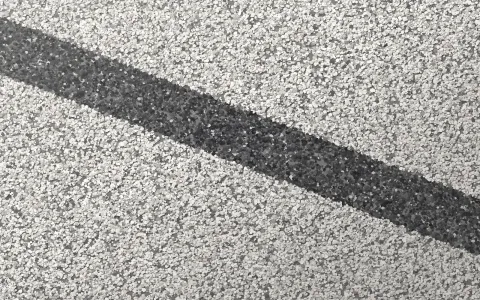
Natural marble is crushed, graded by grain size and sorted by colour. The granules are mixed with a binder, often called the “chemical”, and trowelled onto a primed wall. The texture is the stone itself: you can feel each granule, and the surface catches light like a natural stone wall. This is the finish most people in North India mean when they ask for a marble texture wall on an elevation or boundary wall.
Common names: Madrasi Dana, Madras dana paint, marble dana paint, marble chips paint, marble granules paint, granules texture paint, stone chips wall paint and dana paint for walls.
2. Smooth marble effect (faux marble)
Here the marble look is created, not built from stone. A painter lays a base coat, then tinted glazes and fine veins. Alternatively, a polished plaster (stucco, Venetian plaster or marmorino) is trowelled on in thin layers and burnished. The result is smooth to the touch, from matte to high gloss, and looks like a polished marble slab rather than a stone texture.
Common names: marble effect paint, faux marble paint, Italian marble finish, marble look paint, stucco marble and polished marble effect.
Granular vs smooth: the main differences
- Look and touch: granular is rough with a stone sparkle; smooth effect is flat and polished, with visible veins.
- Material: granular uses marble granules plus a binder; smooth effect uses base paints, glazes, decorative plasters and sealers.
- Tools: granular is mostly laid with a steel trowel; smooth effect uses trowels, brushes, sponges, feathers and burnishing tools.
- Best for: granular suits elevations, boundary walls, pillars and bold feature walls; smooth effect suits living rooms, TV walls, reception areas and other close-up interior walls.
- Cost: granular is usually the lower-cost option per sq ft; smooth effect is a premium, labour-heavy finish.
- Repairs: both are hard to patch invisibly. Small repairs on veined effects are especially difficult to match.
Venetian plaster, marmorino and stucco are related decorative plasters. They are not the same product as Madrasi Dana and should not be priced or applied as if they were.
Madrasi Dana, marble dana and marble chips paint: what the names mean
“Dana” means grain. Madrasi Dana is the trade name used by many Indian suppliers and painters for the granular marble finish. Marble dana, marble chips paint, marble granules paint and stone chips paint usually refer to the same family: natural stone granules held on the wall by a binder. Many sellers also offer glitter or sparkle dana and mixed-colour blends.
Names change from shop to shop, so compare products on what they actually contain:
- the type and colour of the granules
- the grain size range
- the binder, and whether it is rated for exterior use
- the stated coverage per kg
- whether the pack is ready to use or needs a separate binder
Marble texture paint material: granules, binder and grain size
Granules
The granules give the finish its colour and texture. Natural marble colours (white, grey, black, beige, brown and green tones) are used as they are. Other shades come from coloured or blended granules. Natural stone varies, so ask for granules from one batch for one wall, or blend bags before you start.
Binder (the “chemical”)
The binder holds the granules on the wall. It decides most of the performance: adhesion, water resistance, washability and how well the finish copes with sun and rain. Some suppliers sell granules and binder separately; others sell a ready mix that only needs stirring.
If the binder comes separately, use the one the granule supplier specifies, at the stated ratio. Mixing brands, or thinning the binder to stretch it, is a common reason for granules falling off later.
Fine, medium or coarse grain
- Fine grain: a subtle, almost smooth stone look with a soft sparkle. Good for interiors, small rooms and walls seen up close. The coat is thinner, so it usually covers more area per kg.
- Medium grain: the all-rounder. It reads as stone from a few metres away and works indoors and outdoors.
- Coarse grain: a bold texture that is still visible from the road. Suits front elevations, boundary walls and pillars. It uses more material per sq ft, and the deeper texture holds more dust.
Grain sizes are not standardised between suppliers. Ask for the actual size range in millimetres and look at a real sample before you choose.
Check the technical data sheet
Before you buy, ask the supplier for the technical data sheet (TDS) and check:
- interior, exterior or both
- coverage per kg, and the thickness that figure assumes
- mixing ratio, or confirmation that it is ready to use
- which primer or base coat to use
- application temperature and weather limits
- drying time, recoat time and full curing time
- cleaning method
- shelf life, batch number and warranty terms
How to choose marble texture paint: shade card, catalogue, samples and reviews
Most buyers start from a catalogue or online photos. Use them for ideas, then decide on the real material.
- Catalogue and images: catalogue photos and online marble texture paint images are edited and lit for display. Use them to shortlist a design, not to approve a colour.
- Shade card: a shade card is closer to reality, but a small chip looks lighter than a full wall. Pick two or three options from it.
- Sample: ask for a physical sample of the exact grain and colour, or a sample panel on your wall. Look at it in morning and evening light.
- Specifications: compare technical data sheets: interior or exterior rating, coverage, binder type, curing time and cleaning method.
- Ready mix or kit: a ready-mix product, or a matched kit of granules and binder, reduces mixing errors. Loose granules with a separately bought binder need more care.
- Reviews: online reviews rarely show how a wall looks after two monsoons. Ask the supplier or applicator for photos or addresses of jobs that are at least a year old, and check them for shedding, streaks and fading.
Marble texture paint benefits and disadvantages
Benefits
- A real stone look and feel without the weight, joints or cost of stone cladding or marble slabs.
- Hides minor surface irregularities better than plain emulsion.
- A wide range of colours, grain sizes and two-colour designs.
- Durable on exterior walls when the product, preparation and application are right.
- Works on curved surfaces, pillars and bands where tiles and slabs are awkward.
Disadvantages
- The rough surface collects dust, especially coarse grains on walls facing a busy road.
- Hard to remove or repaint later; it usually means scraping or rendering over.
- Patch repairs can show a different shade or texture.
- Results depend heavily on the applicator’s skill: uneven pressure and stopping mid-wall both show.
- It does not fix damp, seepage or cracks underneath. Those must be repaired first.
- Quality varies a lot between binders, and cheap binders are the usual cause of shedding.
Marble texture paint price and rate (2026)
How the rate is quoted
Marble texture paint rates are quoted in four different ways. Make sure you compare like with like:
- Price per kg or per bag: material only. 25 kg bags are common for granules.
- Material cost per sq ft: the material rate divided by coverage.
- Labour cost or application charges per sq ft: the applicator’s rate only.
- Installed rate per sq ft: material and labour together. Ask what is excluded.
Market snapshot, October 2026
- One Indian Madrasi Dana supplier advertises white marble dana from ₹45 per kg and glitter or sparkle dana from ₹70 per kg. These are starting prices; binder, pack size and delivery are not stated.
- Listings on Indian B2B marketplaces quote Madrasi Dana wall texture at roughly ₹40 to ₹60 per sq ft. Most do not say clearly whether labour, primer, scaffolding and GST are included.
- Home-painting service platforms quote texture painting in general at about ₹80 to ₹200 per sq ft, and premium or complex textures at about ₹170 to ₹330 per sq ft or more. Smooth Italian marble effects usually fall in this premium band.
These are advertised figures checked on 4 October 2026, not quotations. Your rate depends on the product, the wall and your city. Always get a written, itemised quote.
For a detailed breakdown with labour charges and worked examples, see our marble texture paint price per sq ft guide.
Price per bag, interior vs exterior price and wholesale rates
- 25 kg bag price: at the advertised starting rate of ₹45 per kg, a 25 kg bag of plain white dana would come to about ₹1,125, before binder (if sold separately), GST and delivery. Coloured and sparkle grades cost more.
- Interior vs exterior price: exterior jobs usually cost more per sq ft than interior ones. They need an exterior-grade binder, often a coarser grain, and scaffolding for height.
- Wholesale price: dealers, contractors and builders buying in bulk are usually quoted separate rates. Ask for the rate per kg at your quantity, the delivery terms, and stock from one batch so the shade stays consistent.
- Price per litre: smooth marble effect paints and decorative plasters are usually sold by the litre or by kg. Whatever the pack size, compare them on cost per sq ft: pack price ÷ the area one pack covers.
What changes the rate per sq ft
- Grain size: coarse grain uses more kg per sq ft than fine grain.
- Colour and type: glitter, sparkle and special-colour granules cost more than plain white.
- Wall condition: crack repair, damp treatment, old paint removal or replastering add cost.
- Height and access: scaffolding for elevations above the ground floor.
- Design: two-colour layouts, bands, panels and pillars take more labour than one flat wall.
- Area: very small jobs often carry a minimum charge; large areas may get a better rate.
- Location and season: travel, local labour rates and weather delays.
Marble texture paint cost calculator: coverage and quantity
Use this method for any granular product:
- Measure the wall area. Length × height for each wall, minus doors, windows and grilles.
- Find the coverage per kg in the technical data sheet for your chosen grain and thickness.
- Divide area by coverage to get the kg needed.
- Add a wastage allowance. Around 5–10% is common; ask your applicator what they need for corners, edges and sample patches.
- Round up to whole bags from one batch.
Worked example (illustration only). Suppose the data sheet says 10 sq ft per kg at the specified thickness. One marketplace listing quotes 10–12 sq ft per kg; coarse grains generally cover less, so use your own product’s figure:
- 100 sq ft: 100 ÷ 10 = 10 kg, plus 10% = about 11 kg.
- 500 sq ft: 500 ÷ 10 = 50 kg, plus 10% = about 55 kg, just over two 25 kg bags.
- 1,000 sq ft: 1,000 ÷ 10 = 100 kg, plus 10% = about 110 kg, about four and a half 25 kg bags.
Then work out the cost:
- Material: kg needed × rate per kg (check whether the binder is included), plus primer or base coat.
- Labour: area × labour rate per sq ft.
- Extras: surface repairs, scaffolding, masking, cleaning and GST.
What a good quotation should include
- Product name, grain size, colour and batch details
- Material rate and quantity, with coverage stated
- Primer or base coat, and any sealer or top coat
- Surface preparation included, and what is excluded
- Labour rate and measured area
- Scaffolding, taxes, transport and the payment schedule
- Time to complete, and warranty terms in writing
Smooth marble effect: what drives the cost
Italian marble finishes, stucco marble and other smooth marble effects are labour-heavy. The cost goes up with the number of layers, the complexity of the veining, how flat the wall must be first (often a full putty and sanding stage), metallic or gold detailing, and the sealer, wax or clear coat the system needs. Get a per sq ft quote for your exact design, and ask to see a sample board before you approve it.
Marble texture paint colours and colour combinations
This section covers the essentials; for more shades and room-by-room ideas, see our full guide to marble texture paint colours and combinations.
Granular finish colours
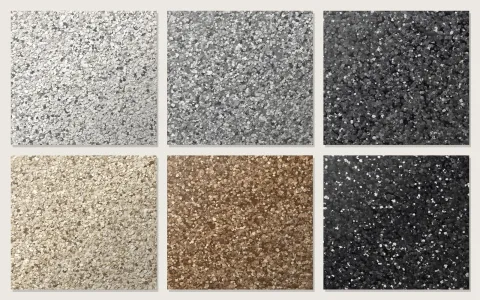
Madrasi Dana colours range from white, cream and beige through sand, brown and grey to charcoal and black. Many suppliers also offer blue, green and glitter variants. Natural granules vary slightly, so always choose from a physical sample or shade card, not a phone photo.
Combinations that work
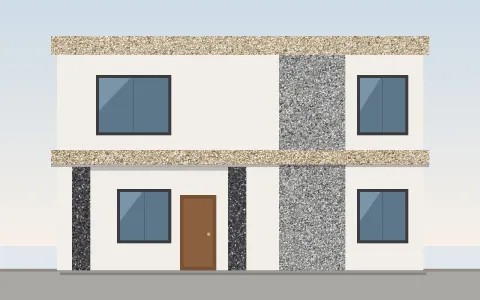
- White and grey: the classic modern elevation. Grey on bands, pillars or the plinth; white on the main panels.
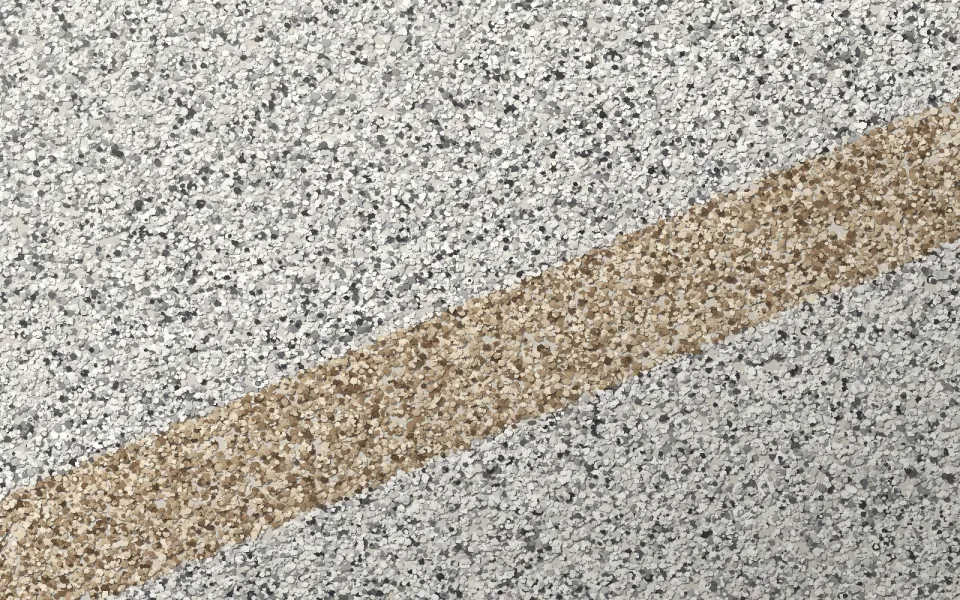
- Beige and brown: warm and forgiving with dust. Suits boundary walls and homes with wooden doors.
- Cream with charcoal: a strong contrast for frames around windows and the main entrance.
- Grey with black: a sharp, contemporary look for commercial buildings and shopfronts.
For two-colour exteriors, use the darker shade on lower or narrower elements (plinth, pillars, bands) and the lighter shade on large panels. Match it to fixed elements you cannot change: window frames, railings, door colour and roof tiles.
Light colours or dark colours?
- Light shades keep walls cooler in direct sun and make small rooms feel bigger, but they show rain streaks and dirt runs.
- Dark shades look premium on bands and pillars, but they get hotter in the sun and show grey dust and fading more.
On exteriors facing strong afternoon sun or a dusty road, mid-tones (beige, sand, light grey) are the most forgiving.
Smooth marble effect colours and vein designs
- White with grey veins: the Carrara-style look. Calm and bright.
- Calacatta style: a white ground with bolder grey or gold veins, for statement walls.
- Black with white veins: dramatic, best on one feature wall with good lighting.
- White and gold or black and gold: metallic veins for luxury interiors, reception walls and hotel lobbies.
- Grey and silver: a cooler metallic option for offices and modern homes.
- Green, blue, pink and beige marble effects: softer accent walls for bedrooms and dining areas.
For veined designs, ask the painter for a sample board in your actual room light. Veins that look subtle in a photo can look busy on a full wall.
Where to use marble texture paint indoors
Indoors, marble texture works best on one feature wall rather than every wall in a room. Fine grain or a smooth marble effect usually suits interiors better than coarse grain.
- Living room and TV wall: the most popular choice. Keep the TV wall a mid or dark tone to reduce glare, and light it from above or the sides.
- Bedroom: the wall behind the bed, in calm shades such as cream, beige or light grey.
- Dining room and hallway: a single accent wall or a band at eye level.
- Pooja room: white or cream marble textures suit traditional pooja spaces.
- Staircase wall: a tall wall that shows texture well; plan scaffolding for double-height walls.
- Study room: fine grain, light colours and low sparkle, so it does not distract.
- Office, reception, hotel lobby, restaurant and shop interiors: marble texture behind the reception desk or brand logo. Choose a finish that is easy to clean where people touch the wall.
- Columns: a smooth marble effect on columns gives a stone-pillar look without cladding.
- Ceiling: possible, but trowelling overhead is harder and the finish adds weight. Check that the product is approved for ceilings.
- Small rooms: use fine grain in a light colour on one wall only.
- Kitchen and bathroom walls: use only on dry walls away from direct splashes, steam and the shower area, and only with a product approved for humid areas. Tiles remain the better choice for wet zones.
Marble texture paint for exterior walls, front elevation and boundary walls
Exterior marble texture is where the granular finish is used most in India. For outdoor walls, the product must be rated for exterior use. The binder has to cope with sun, rain and dust, so an interior product will fail outside.
Front elevation design ideas
For layouts by house type, see our marble texture front elevation designs guide.
- Vertical panels: a textured panel running the full height of the house, with plain paint on either side.
- Horizontal bands: textured bands at floor levels or along the parapet to break up a tall facade.
- Window and door frames: a contrasting texture around openings.
- Pillars and porch columns: darker grain on pillars, lighter on the walls.
- Entrance wall: a feature panel beside the main door with the house name or number.
- Modern exteriors: grey or charcoal texture combined with white smooth paint, wood-look panels or glass.
Boundary and compound walls
Boundary walls take the most dust, rain splash and sun. Medium or coarse grain in beige, brown, grey or a blended colour hides dirt better than pure white. Make sure the coping on top of the wall sheds water. Treat any rising damp at the bottom of the wall before texturing.
Balcony, porch and commercial buildings
Balcony walls and porches are partly exposed, so treat them as exterior. On commercial buildings and showrooms, marble texture on the ground-floor facade and pillars gives a premium look at lower cost than stone cladding. Plan the design around signage and lighting.
Wall preparation before marble texture paint
Most marble texture failures (peeling, cracking, white patches and falling granules) start with the wall, not the material. The surface must be sound, clean, dry and compatible with the system you are using.
New cement plaster and concrete
- Let new plaster cure and dry fully before priming. Follow the primer and texture manufacturer’s minimum waiting time.
- Remove dust, loose sand, oil and shuttering residue from concrete.
- Fill cracks and hollows with a compatible repair material, and let it cure.
Brick walls
Most granular systems expect a plastered, even surface. On bare brick, plaster the wall first unless the product data sheet specifically allows direct application.
Old painted walls and emulsion
Marble texture can go over existing paint only if the old coating is firmly bonded and compatible. Check before you decide:
- Tape test: stick strong tape on the paint and pull it off sharply. If paint comes away, it must be removed.
- Scratch test: scratch a small cross. Flaking edges mean poor adhesion.
- Chalk test: rub with a dark cloth. Heavy powder means the surface must be cleaned and primed or removed.
- Water test: splash water. If it soaks in unevenly or the paint softens, ask the supplier about compatibility.
Remove peeling, chalky or damp-damaged paint down to a sound surface. Glossy enamel or oil paint usually needs sanding or a special primer.
Damp walls, seepage and waterproofing
Never apply marble texture on a damp wall. Find and fix the source first: roof leaks, plumbing, rising damp, cracked parapets or poor slopes. Where waterproofing is needed, finish it before the texture and check that the texture system is compatible with it. A decorative texture is not a waterproofing system, even if the binder is water resistant.
Uneven walls and putty
A granular finish hides small irregularities, but it follows big bumps and dips. Correct those with plaster repairs. Wall putty is not needed in every system. Some granular products go directly on primed plaster, and putty under an exterior texture must be exterior-grade if it is used at all. Smooth marble effects, on the other hand, usually need a very flat, putty-finished wall.
Primer and base coat
Use the primer or base coat the texture manufacturer specifies. Many systems use a base coat tinted close to the granule colour, so tiny gaps between granules do not show the grey plaster underneath. Let it dry fully before texturing.
Sample panel
Before the full job, apply a sample panel of about one square metre on the actual wall, in the actual light. Check the colour, grain, sparkle and adhesion, then approve it in writing. It is the cheapest way to avoid a whole-wall mistake.
How to apply marble texture paint: step by step
This is the general method for a granular (Madrasi Dana) finish. Always follow your product’s data sheet for ratios, thickness and timing.
Tools
- Steel finishing trowel (karni) for laying and pressing the texture
- Hawk or mixing board to hold the mix
- Drill mixer with a paddle, and clean buckets
- Roller and brush for primer or base coat
- Masking tape and plastic sheet
- Scaffolding or a stable platform for height
- Spray gun, only if the product is approved for spray application
Step-by-step application process
- Inspect and repair. Complete all crack repairs, damp treatment and plaster work, and let them cure.
- Mask. Protect windows, grilles, floors, switchboards and adjoining paint.
- Prime or base coat. Apply the specified primer or tinted base coat and let it dry fully.
- Mix. For two-part systems, add granules to binder at the manufacturer’s ratio and mix with a paddle to an even, trowelable consistency. Use the same ratio for every batch; guessed ratios drift, and the drift shows as shade bands. Do not add water or thinner unless the data sheet allows it.
- Apply a test area. Check the colour and texture on a hidden spot or the sample panel.
- Trowel on. Load the trowel and spread the mix in even passes, roughly one granule thick unless the data sheet says otherwise. Keep the pressure even. Pressure decides the thickness, and even thickness is the craft.
- Work in panels with a wet edge. Finish a whole panel or wall section without stopping. Plan joints at corners, bands or grooves so they do not show in the middle of a wall.
- Finish. Press and smooth the surface as the product specifies, for a uniform look.
- Protect while curing. Keep hands, ladders, dust and rain off the wall until it has cured.
- Top coat, if specified. Some systems need a clear sealer or top coat; others do not. Use only what the manufacturer recommends.
- Clean tools immediately, before the binder sets.
Mixing ratio
There is no universal marble texture paint mixing ratio. Each binder is formulated for its own granules and grain size. Ready mixes need only stirring. For two-part systems, use the ratio printed on the pack or the data sheet, and measure it by weight every time.
Trowel or spray application?
Granular marble finishes are usually laid by trowel, which gives the best control over thickness and texture. Some products are formulated for spray application. Only use a spray gun if the data sheet allows it, with the nozzle and pressure it specifies. Rollers are generally used for the primer, not the granular layer.
Drying time and curing time
Drying time is when the surface is dry to the touch. Curing time is when the binder has fully hardened and reached its strength. Curing always takes longer. Both depend on the product, the thickness, temperature and humidity, so take the figures from the data sheet. Do not wash the wall or expose it to heavy rain before it has cured.
Application in summer and the monsoon
- Summer: avoid direct midday sun on the wall. Hot walls dry the mix too fast, which causes lap marks and weak bonding. Work on the shaded side and follow the sun around the building.
- Monsoon: do not apply on damp walls or when rain is expected before the finish has set. Check the humidity and temperature limits in the data sheet, and cover fresh work if needed.
- Temperature: stay within the minimum and maximum application temperatures the manufacturer gives.
Common application mistakes
- Applying on damp, dusty, chalky or unprimed walls
- Changing the mix ratio between batches, or thinning the binder
- Uneven trowel pressure, which leaves thick and thin patches
- Stopping in the middle of a wall, which leaves a visible joint
- Changing applicators halfway through one elevation
- Mixing granules from different batches without blending
- Working in direct hot sun or just before rain
- Skipping the sample panel
Marble effect painting technique: how a smooth finish is made
A smooth marble effect, also called marbling or faux marbling, is a different craft from a granular coating. In outline:
- The wall is made very flat, usually with putty and sanding, then given a base coat.
- One or more tinted glazes are applied and blended with a sponge, brush or trowel to create depth.
- Veins are drawn with a fine brush or feather and softened so they look natural.
- Polished plaster systems (stucco, Venetian plaster or marmorino) are trowelled on in thin layers and burnished to a sheen.
- A sealer, clear coat or wax is applied only if the system calls for it.
- The final sheen (matte, satin or high gloss) depends on the system and on how much the surface is burnished or sealed.
For a whole wall, practise on a board first, or hire a painter who can show finished samples of the exact design.
Marble texture paint: frequently asked questions
What is marble texture paint?
It is a decorative wall finish that gives the look of marble. It is either a granular coating of real marble chips in a binder (Madrasi Dana) or a smooth painted or plastered marble effect.
Is Madrasi Dana the same as marble texture paint?
Madrasi Dana is one type of marble texture paint: the granular, marble-chips type. A smooth marble effect is also called marble texture paint, but it is a different product with different tools, cost and look.
What is the marble texture paint rate per sq ft?
In October 2026, B2B marketplace listings put Madrasi Dana wall texture at roughly ₹40–₹60 per sq ft. Premium textures and smooth marble effects are quoted much higher, often ₹170 per sq ft or more. Check whether a rate includes labour, primer, scaffolding and GST, and get a written quote.
What is the price per kg of marble texture paint?
One supplier advertises white marble dana from ₹45 per kg and glitter dana from ₹70 per kg (October 2026). Prices vary with grain, colour, binder and quantity.
How much marble texture paint do I need for 100 sq ft?
Divide the area by the coverage per kg in your product’s data sheet and add 5–10% for wastage. If the product covers 10 sq ft per kg, 100 sq ft needs about 11 kg.
Is marble texture paint waterproof?
Some binders are water resistant, and some products are marketed as waterproof. But a decorative texture does not replace waterproofing or fix seepage. Repair leaks and damp first, and check the product’s data sheet for what it is actually rated for.
Can marble texture paint be applied on an old painted wall?
Yes, if the old paint is firmly bonded and compatible. Do the tape, scratch and chalk tests. Remove peeling, chalky or damp-damaged paint first.
Is primer necessary before marble texture paint?
Yes. Use the primer or base coat the texture manufacturer specifies. A tinted base coat also helps hide the plaster between granules.
Do I need wall putty before marble texture paint?
Not always. Many granular systems go on primed plaster without putty, and putty under an exterior texture must be exterior-grade. Smooth marble effects usually need a putty-finished wall.
How long does marble texture paint take to dry?
It depends on the product, thickness and weather. Drying to the touch is quicker than full curing. Use the times in your product’s data sheet, and keep the wall protected from rain until it has cured.
Can marble texture paint be applied with a roller or spray?
Granular finishes are normally trowelled. Spray is possible only with products made for it. Rollers are used for the primer, not for the granular coat.
What is the price of a 25 kg bag of marble texture paint?
At the advertised starting rate of ₹45 per kg (October 2026), a 25 kg bag of plain white marble dana comes to about ₹1,125, before binder, GST and delivery. Coloured and sparkle grades cost more.
Is marble texture paint good for exterior walls?
Yes, the granular finish is widely used on Indian elevations and boundary walls. Use a product rated for exterior use, on a dry, repaired and primed wall, and let it cure before heavy rain.
Which is better, fine or coarse marble texture?
Fine grain suits interiors and walls seen up close. Coarse grain gives a bold stone look on elevations and boundary walls, but uses more material and holds more dust. Medium grain works in both places.
Which colour is best for an exterior marble texture?
Mid-tones such as beige, sand and light grey are the most practical for dusty, sunny sites. White with grey is the most popular two-colour combination for modern elevations.
Next step: see samples and get a quote
The best way to choose a marble texture is to see the real grain and colour on your own wall. Send us your wall photos, approximate measurements and city using the WhatsApp button below this article. We can help you choose between Madrasi Dana and a smooth marble effect, suggest grain sizes and colours, and prepare an itemised quote.